Life I · The companion
Cimabue
Further Reading & Selected Works
A modern orientation
After Vasari,
before the legend.
Vasari needs Cimabue to be a beginning: the first Florentine light after a long darkness. The surviving works tell a more complicated story.
Cimabue remains a central figure in late thirteenth-century Italian painting, but the modern picture is assembled from a small, debated group of panels, crucifixes and frescoes rather than from Vasari's confident biography.
Some of the Life's most memorable episodes belong to legend; some celebrated works have moved to other artists. The pages below are therefore selective points of entry, not a catalogue raisonné: places to look closely and to notice the distance between Vasari's story and the objects that remain.
Look closely
Selected works
Four points of entry into the paintings, before returning to what Vasari says—and what he leaves out.
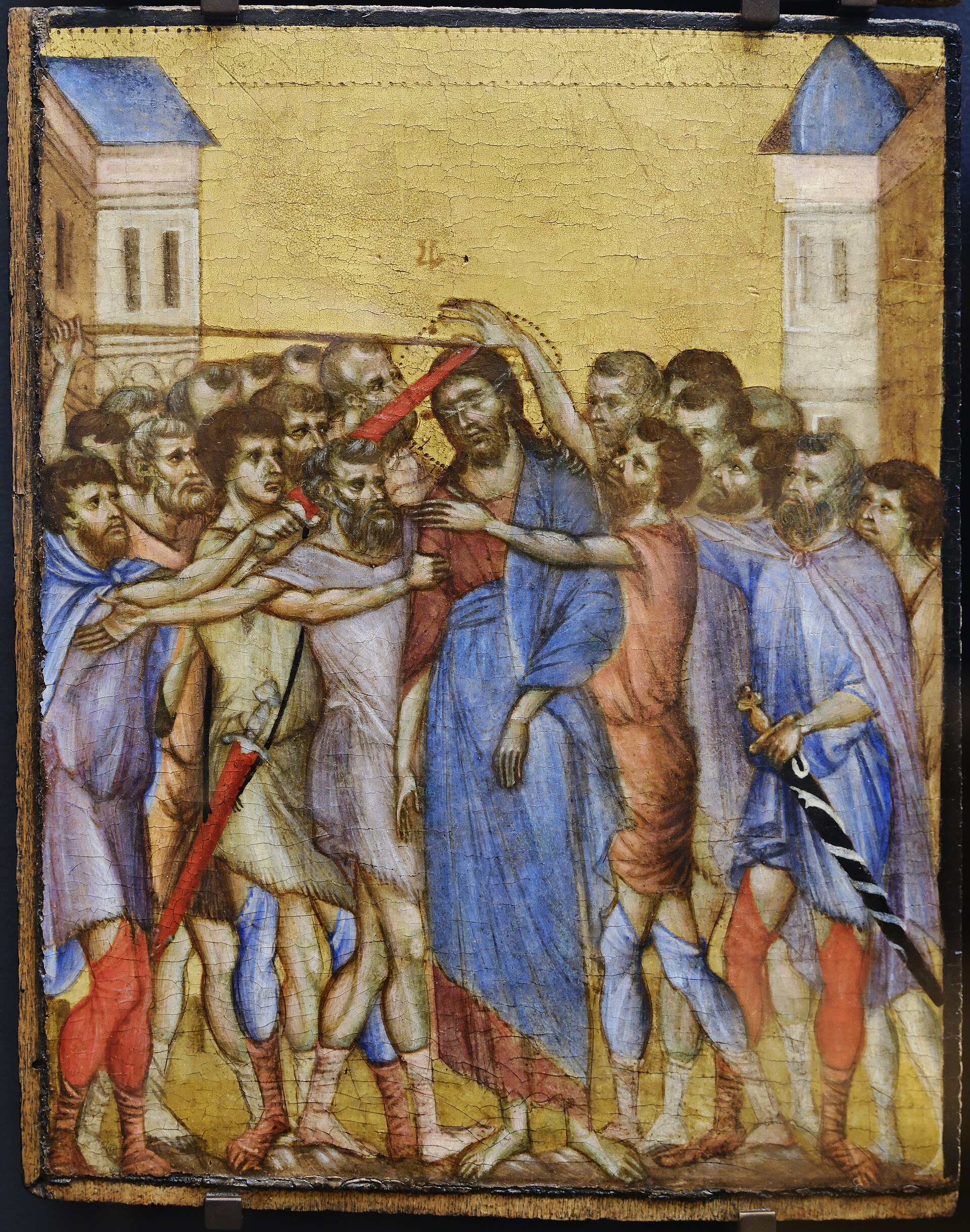


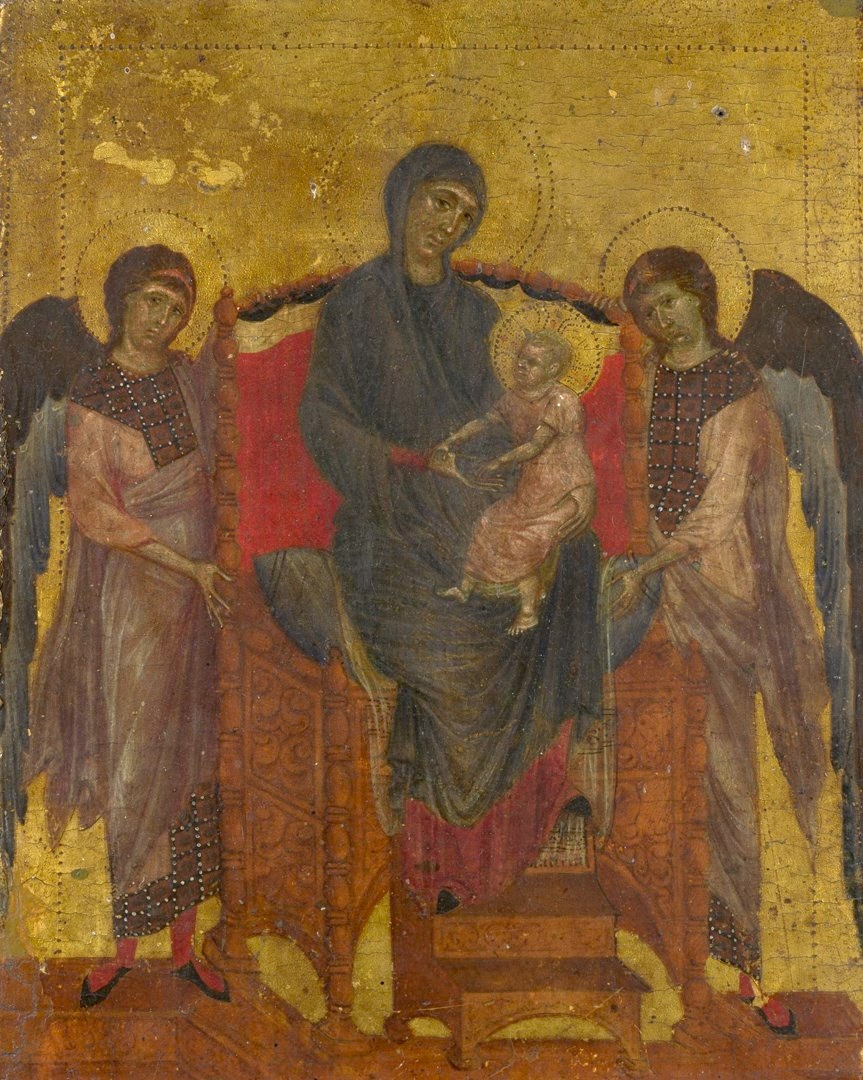
Follow each image to its museum or source record.
The Mocking of Christ
The tiny panel that surfaced in a kitchen near Compiègne in 2019. Now joined in scholarship to two other Passion scenes, it offers a startling modern counterpoint to Vasari’s narrow catalogue.
↗02Santa Trinita Maestà
One of the rare major works in Vasari’s Life that remains securely associated with Cimabue. Look at the stacked throne, the angels’ repeating gestures and the four prophets below.
↗03The Santa Croce Crucifix
A monumental painted cross whose damaged surface bears the history of the 1966 Florence flood. It makes Vasari’s abstract language of softness, line and naturalism unusually concrete.
↗04Upper Church, San Francesco at Assisi
The fresco cycle is central to Vasari’s claim that Cimabue advanced painting in scale, colour and invention. Its authorship, workshop divisions and condition remain subjects of debate.
↗05The Rucellai Madonna
Vasari’s triumphant procession belongs to the legend of Cimabue, but the panel is now attributed to Duccio. It is the clearest warning against reading the Life as a modern catalogue raisonné.
↗Continue